(309) 681-5500
Peoria, Illinois Epoxy Flooring
About Us
Over 6,000 Satisfied Customers
150+ (5) Star Reviews
Book Estimate Online
SEE OUR WORK
Watch a Real Install
(Feb. 2026)
Click below >>>
to watch video.
See Our Reviews
COLORS
Let Us Coat Your
Dream Floor!
HOME OWNERS
Garage
Basement
Driveway, Pool deck, sidewalk, porch
BUSINESS OWNERS
Civil
Hospitality
Shipping
Medical
Aviation
SEE OUR WORK
Peoria, Illinois
Epoxy Flooring
Peoria Epoxy Flooring Systems:
Epoxy flooring Peoria, our systems are among the most widely used high-performance floor coatings in residential, commercial, and industrial environments. Known for their durability, chemical resistance, seamless appearance, and design versatility, epoxy floors have become a preferred solution for garages, warehouses, hospitals, laboratories, schools, retail spaces, and even modern homes.
An epoxy flooring Peoria system is not just a single layer of paint. Instead, it is a carefully engineered combination of resins, hardeners, and additives applied over a prepared substrate—usually concrete—to create a hardened, protective surface. Peoria Epoxy When installed correctly, epoxy floors can last many years while maintaining structural integrity and aesthetic appeal.
We explore epoxy flooring systems in depth, covering their chemistry, types, components, installation process, advantages, limitations, maintenance requirements, and future trends. By the end, you will have a clear understanding of how epoxy flooring systems work and where they are best applied.
What Is Peoria Epoxy?
Epoxy is a class of thermosetting polymers formed by mixing epoxy resin with a curing agent (also called a hardener). When these two components are combined, a chemical reaction occurs that transforms the liquid mixture into a rigid, solid plastic material.
Unlike air-dry paints, epoxy cures through chemical cross-linking rather than evaporation. This reaction results in a strong, dense, and highly adhesive material capable of bonding tightly to concrete and other substrates.
Basic Chemistry of Epoxy
Epoxy resins typically contain epoxide groups, which react with amines or other curing agents. During curing, molecular chains cross-link, forming a three-dimensional network. This structure gives epoxy its:
High compressive strength
Excellent adhesion
Resistance to chemicals and moisture
Dimensional stability
Once cured, epoxy cannot be re-melted or reshaped, which classifies it as a thermoset polymer.
What Is an Epoxy Flooring System?
An epoxy flooring system is a multi-layer coating system applied to concrete or other substrates. Depending on the performance requirements, a system may include:
Surface preparation
Primer coat
Base epoxy coat
Optional broadcast media (flakes, sand, quartz)
Topcoat or seal coat
The thickness of epoxy flooring systems typically ranges from 10 mils (thin film coatings) to 250+ mils (heavy-duty industrial systems).
Epoxy Near Me | Epoxy Flooring Near Me
Components of Epoxy Flooring Systems
Epoxy Resin
The resin is the main body of the system. It determines:
Strength
Chemical resistance
Clarity
Flexibility
Common epoxy resin types include:
Bisphenol-A epoxies (most common)
Bisphenol-F epoxies (lower viscosity, higher penetration)
Novolac epoxies (high chemical and heat resistance)
Curing Agents (Hardeners)
Curing agents control:
Cure time
Hardness
Chemical resistance
Temperature tolerance
Common curing agents include aliphatic amines, cycloaliphatic amines, and polyamides.
Fillers and Aggregates
Fillers improve performance and reduce cost. Aggregates may include:
Silica sand
Quartz
Aluminum oxide
Decorative vinyl flakes
Pigments and Additives
These enhance appearance and functionality:
Color pigments
UV stabilizers
Slip-resistant additives
Anti-microbial agents
Types of Epoxy Flooring Peoria Systems
Self-Leveling Epoxy Floors
Self-leveling epoxy flows easily to create a smooth, seamless surface. Commonly used in:
Hospitals
Laboratories
Warehouses
Advantages:
Smooth and hygienic
High durability
Easy to clean
Epoxy Mortar Floors
Epoxy mortar systems combine Peoria epoxy resin with graded sand or aggregates.
Applications:
Heavy industrial facilities
Manufacturing plants
Mechanical rooms
Advantages:
Extremely durable
Resistant to impact and chemicals
Can repair damaged concrete
Quartz-Filled Epoxy Flooring
These systems incorporate colored quartz sand into epoxy.
Applications:
Locker rooms
Restrooms
Schools
Swimming pool areas
Advantages:
Decorative appearance
Slip resistance
Moisture tolerance
Epoxy Flake Flooring
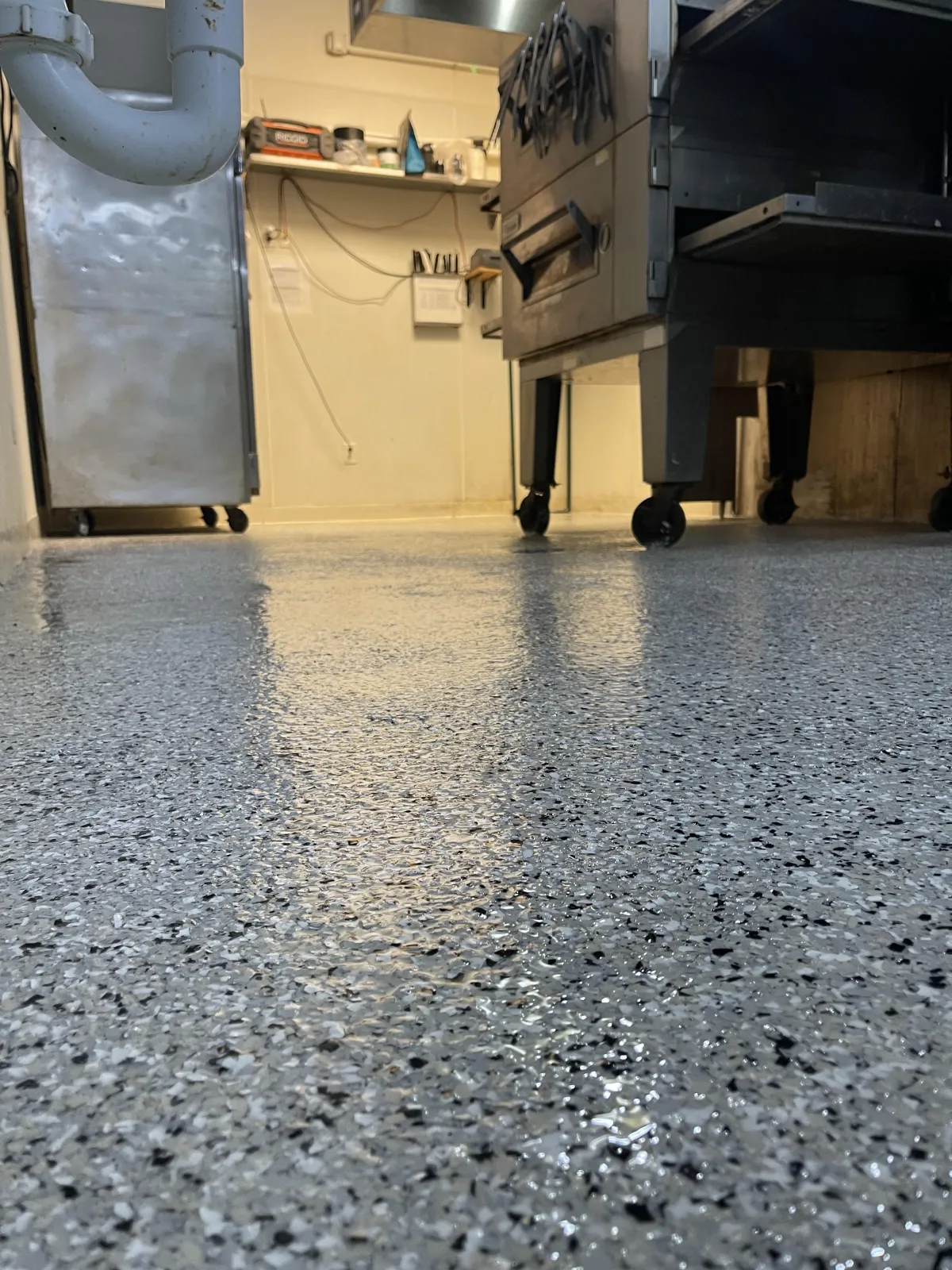
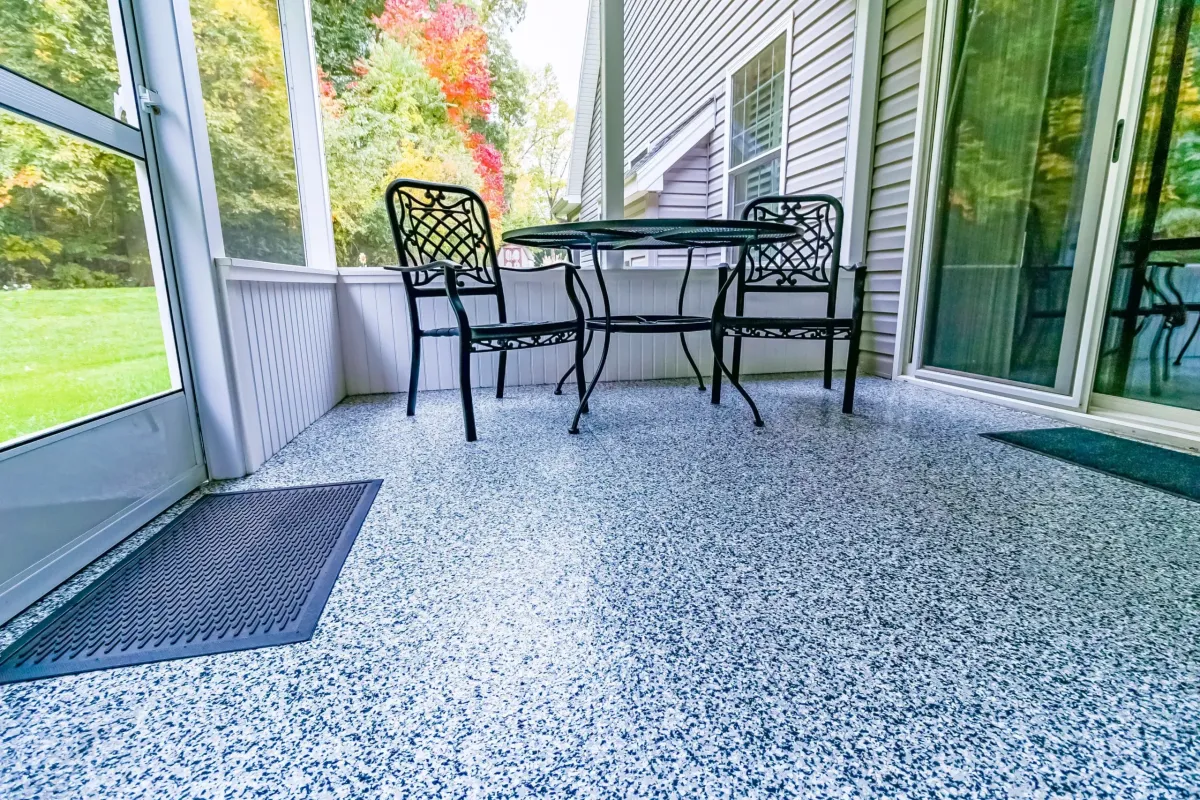
Vinyl flakes are broadcast into wet epoxy to create a textured, decorative surface.
Common Uses:
Garages
Retail spaces
Showrooms
Residential interiors
Advantages:
Customizable designs
Hides imperfections
Slip-resistant
Anti-Static Peoria, Illinois Epoxy Flooring
Designed to dissipate static electricity.
Applications:
Electronics manufacturing
Data centers
Laboratories
Advantages:
Protects sensitive equipment
Improves workplace safety
Chemical-Resistant Epoxy Flooring
Formulated for extreme chemical exposure.
Applications:
Chemical plants
Pharmaceutical facilities
Waste treatment plants
Substrate Considerations
Concrete Substrates
Concrete is the most common base for epoxy flooring. Important factors include:
Moisture content
Surface profile
Compressive strength
Cleanliness
6.2 Moisture Issues
Moisture vapor transmission can cause:
Bubbling
Delamination
Blistering
Moisture mitigation systems may be required.
Surface Preparation
Surface preparation is the most critical step in epoxy flooring installation.
Mechanical Preparation
Common methods:
Shot blasting
Diamond grinding
wall prep for example if your in Central Illinois, Drywall Repair Bloomington, Illinois does a fantastic job.
Scarifying
These methods open concrete pores and ensure proper adhesion.
Cleaning and Repair
Oil and grease removal
Crack filling
Joint repair
Poor preparation is the leading cause of epoxy floor failure.
Epoxy Flooring Installation Process: Peoria, IL. Epoxy Flooring
Our Step-by-Step Installation
Surface inspection
Mechanical preparation
Cleaning and repairs
Primer application
Base coat application
Broadcasting media (optional)
Topcoat application
Curing and inspection
Curing Time
Cure times vary depending on:
Temperature
Humidity
Epoxy formulation
Typical cure stages:
Light foot traffic: 12–24 hours
Full cure: 5–7 day
Advantages of Epoxy Flooring Systems
Durability and Strength
Epoxy floors withstand heavy loads, impacts, and abrasion.
Chemical Resistance
Resistant to oils, fuels, solvents, acids, and cleaning chemicals.
Seamless and Hygienic
No grout lines means fewer places for bacteria and dirt.
Aesthetic Versatility
Wide color range
Decorative flakes
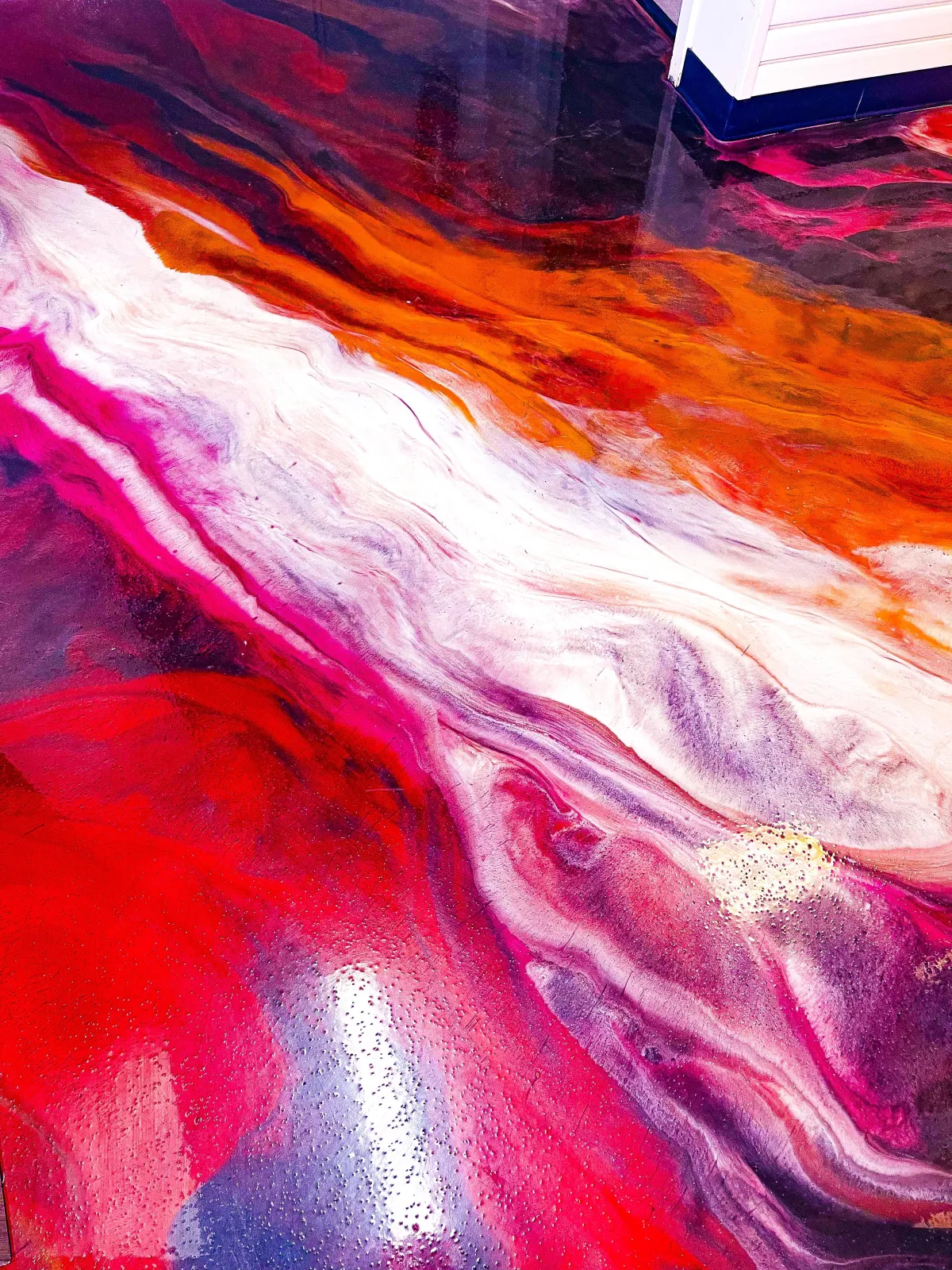
Metallic effects
Gloss or matte finishes
Easy Maintenance
Simple cleaning
Stain resistance
Reduced long-term costs
Limitations of Epoxy Flooring
UV Sensitivity
Standard epoxies may yellow or chalk under UV exposure.
Slipperiness
Glossy finishes can be slippery when wet unless additives are used.
Installation Sensitivity
Requires skilled application
Sensitive to temperature and moisture
Rigid Nature
Epoxy does not flex significantly and may crack if the substrate moves.
Maintenance and Care
Routine Cleaning
Dust mopping
Neutral pH cleaners
Soft bristle brushes
Avoiding Damage
Use protective pads under equipment
Clean spills promptly
Avoid harsh acids unless rated
Repair and Re-coating
Minor scratches can be repaired; re-coating extends lifespan.
Lifespan and Performance
A well-installed epoxy flooring system can last:
5–10 years in residential settings
10–20 years in commercial or industrial environments
Lifespan depends on traffic, maintenance, and system type.
Cost Considerations
Factors Affecting Cost
Surface condition
System thickness
Decorative elements
Labor and preparation
Cost vs. Value
Although initial costs may be higher than paint or tile, epoxy offers long-term savings due to durability and reduced maintenance.
Safety and Environmental Considerations
Indoor Air Quality
Low-VOC and water-based epoxies improve indoor air quality.
Slip Resistance
Additives improve traction in wet environments.
Sustainability
Long lifespan reduces material waste; some epoxies contain recycled content.
Peoria Epoxy Flooring | 1 Day Floors vs. Other Flooring Systems
Epoxy vs. Tile
Epoxy is seamless and chemical-resistant
Tile has grout lines and may crack
Epoxy vs. Polished Concrete
Epoxy offers chemical resistance
Polished concrete is more breathable
Epoxy vs. Urethane Flooring
Epoxy is harder and more rigid
Urethane is more flexible and UV-stable
Common Applications of Epoxy Flooring
Industrial plants
Garages
Hospitals
Schools
Retail stores
Food processing facilities
Laboratories
Residential interiors
Common Problems and Failures
Delamination
Caused by moisture or poor surface preparation.
Bubbling and Blistering
Often due to trapped air or moisture vapor.
Cracking
Reflects movement or cracks in the concrete substrate.
Quality Control and Standards
Epoxy flooring installations often follow industry standards such as:
Surface profile guidelines
Adhesion testing
Thickness measurements
Professional installation ensures performance and compliance.
Future Trends in Epoxy Flooring Systems
Improved UV Resistance
Hybrid epoxy-polyurethane systems reduce yellowing.
Faster Cure Technologies
Rapid-cure epoxies minimize downtime.
Decorative Innovation
Metallic epoxies and custom designs continue to grow in popularity.
Sustainable Formulations
Low-VOC and bio-based epoxies are expanding.
Epoxy flooring Peoria, IL. systems represent one of the most versatile and durable flooring solutions available today. Their ability to combine strength, chemical resistance, hygiene, and visual appeal makes them suitable for a wide range of environments, from heavy industrial facilities to modern residential interiors.
While epoxy flooring requires careful surface preparation and skilled installation, the long-term benefits—extended lifespan, low maintenance, and customizable design—often outweigh the initial investment. As materials science continues to advance, epoxy flooring systems are becoming even more resilient, environmentally friendly, and visually sophisticated.
Understanding the components, types, installation process, and maintenance requirements of epoxy flooring systems allows owners, designers, and builders to make informed decisions and maximize the performance of these high-performance surfaces.
Process
Peoria, Il. Epoxy
After we complete your estimate, You are now ready to choose your color and get started.
Here’s a quick look at how we bring your New Floor to life.
01 - PREP
We grind the floor then repair any cracks and spalling in floor.
02 - COAT
We apply a moisture vapor barrier and multiple coats to reach your desired finish.
03 - SEAL
We finish by applying a clear coat of finish to protect your new floor.
READY FOR YOUR
DREAM FLOOR!?
Call us today at 309.681.5500 to get started or book a free estimate online.
MOST TRUSTED BY














CONTACT
PDPAE
Peoria Drywall
Paint and Epoxy
8101N. University St.
Peoria, Illinois 61615
(309) 681-5500
FOLLOW US